SEO work is easy to spend money on and hard to prove. SEO performance reporting turns rankings, traffic and conversions into a clear picture of what is working and what is not.
We explain what belongs in a report, how to measure each number so you can trust it, and how to connect that activity to paying customers rather than clicks alone.
In shortSEO performance reporting is the practice of tracking and presenting how your website performs in search. It gathers metrics like keyword rankings, organic traffic and conversions, then shows what changed and why. A good report links that activity to real business results, so you can decide what to do next.
What SEO performance means for your business
SEO performance measures how well your site attracts and converts visitors from search, not just how high it ranks. A page can sit at the top of the results and still bring no inquiries if the visitors are the wrong people. Performance joins two things: how visible you are, and what that visibility earns you.

The gap between rankings and results is where most reporting falls short. A ranking tells you where a page appears for a search term. A result tells you whether that appearance led to a visit, an inquiry or a sale. One is a position on a page; the other shows up in your revenue.
Visibility now reaches beyond the classic list of blue links. People ask AI assistants for recommendations, so a report has to show whether those tools name you at all. We track whether Google and AI assistants such as ChatGPT and Gemini find and recommend a company. That matters when a buyer asks an assistant who to hire instead of typing a query into a search box. You can see how this works in our SEO and GEO optimization solutions.
Different people read the numbers for different reasons. An owner wants to know if the money is coming back as sales. A marketer wants to see which topics pull traffic, so the next articles can build on them. A stakeholder outside the team wants a short, honest summary of whether the programme is moving in the right direction.
When all three see the same picture, decisions get easier. You stop arguing about whether SEO is working in the abstract and start pointing at specific terms, pages and inquiries. That shared view is the practical reason to treat performance as more than a ranking chart.
Why report on SEO performance at all?
SEO performance reporting exists to prove that search spend produces results and to guide your next decisions. Without it, you are paying for work you cannot see and guessing at what to do next month. A report replaces that guesswork with evidence you can point at and act on.
The first job is proving return on investment. You compare the money and effort going into SEO against the traffic, inquiries and sales coming out. When a topic brings traffic and inquiries, it earns more weight in the plan; when a topic goes nowhere, you stop pouring effort into it.
- Prove the return on your SEO investment
- Decide which topics and pages to prioritise
- Catch ranking or traffic drops early
- Align stakeholders on the same facts
- Keep the work on track month to month
Reporting also keeps teams and stakeholders aligned. When everyone reads the same figures, the conversation moves from opinion to priorities. You can agree on which pages to improve next and which search terms to chase, because the data points the way rather than the loudest voice in the room.
A steady report catches problems while they are small. If a page that used to rank starts slipping, you see it in the trend before the inquiries dry up. The same view surfaces opportunities, such as a term creeping up the results that is worth a little more attention to push onto the first page.
Used this way, a report becomes a feedback loop that improves the strategy. Each round shows what worked, so the next round leans into it. If you want the costs on the other side of that loop to be clear too, our transparent SEO pricing and plans set out what you pay against what you get.
Core metrics every SEO performance report should include
A complete report covers keyword rankings, organic traffic, click-through rate, conversions and technical health. Each metric answers a different question, so reading them together tells you more than any single one on its own. Leave one out and you can draw the wrong conclusion from the rest.
Visibility and traffic metrics
Keyword rankings show where your pages sit for the search terms you care about. Organic traffic counts the visitors who arrive from unpaid search. Rankings explain why traffic rises or falls, so the two belong side by side rather than in separate reports.
Click-through rate shows how often people who see your listing actually click it. A listing can rank well yet attract few clicks if the title and description do not match what the searcher wants. A healthy trend is a click-through rate that climbs as you sharpen those titles, which means more of the people who find you choose you.
Conversions are the point of the whole exercise. A conversion is any action you want a visitor to take, such as a contact form, a call or a purchase. A rising conversion trend tells you the traffic is the right traffic, while flat conversions on growing traffic signal that you are pulling in the wrong audience.
| Metric | What it shows | Why it matters |
|---|---|---|
| Keyword rankings | Where your pages sit for target terms | Explains why traffic moves up or down |
| Organic traffic | Visitors arriving from unpaid search | Shows the size of the audience you reach |
| Click-through rate | How often searchers click your listing | Reveals whether titles match what people want |
| Conversions | Visitors who take the action you want | Ties search activity to business outcomes |
| Technical health | Speed, crawlability and indexation | Tells you if pages can be found and used at all |
| AI mentions | Whether assistants name and recommend you | Captures buyers who ask AI instead of searching |
Technical and AI metrics
Technical health decides whether any of the above can happen. Page speed affects whether a visitor waits or leaves. Crawlability is whether search engines can move through your site, and indexation is whether your pages are stored in the index at all. A page that is not indexed cannot rank, however good the content is.
AI search mentions are the newer metric worth adding. When someone asks an assistant for a supplier, you want to know whether your company comes up in the answer. We follow up every article over the following months and track rankings, traffic and AI mentions together, so a single piece of content is judged on all three.
The vocabulary around AI answers can get confusing fast. If the terms blur together, our guide to understanding modern SEO and AI terms explains what each one means before you decide which to report on.
Want all these metrics in one view? See rankings, traffic and AI mentions tracked together in a single weekly report instead of scattered across tools.
Compare plansHow to measure SEO performance accurately
Accurate measurement starts with clear goals, consistent tools and comparing like-for-like periods. If you change the tool, the time window or the definition of success between reports, the numbers stop meaning anything. Fix those three things first and every later figure becomes comparable.

From setup to results
A repeatable workflow keeps measurement steady. You join, set the data sources once, let the work run, and read the results on the same basis each month.
Because the steps stay the same, a drop in one month points to a real change on your site or in the results, not to a change in how you counted.
Set your goals and KPIs before you measure anything. Decide what a good month looks like, such as more inquiries from a set of commercial terms, not simply more visits. A KPI you agree in advance stops you cherry-picking whichever number happens to look good later.
Use the same tools and the same time periods every time. Compare this month against the same stretch last month, or year on year if your sales have a season. Comparing a quiet month against a busy one tells you about the calendar, not about your SEO.
- Set goals and KPIsAgree what success means before you measure, in terms of inquiries and sales.
- Connect your data sourcesLink your analytics, search data and rank tracking so figures come from one place.
- Measure the same periodsCompare like-for-like windows so trends reflect your work, not the calendar.
- Separate traffic from conversionsReport both, but judge the programme on inquiries rather than visits alone.
- Review and adjust the planAct on what the data shows and feed the next round of work from it.
Separate vanity metrics from business metrics as you read. Total visits feel good but can hide the fact that none of those people became customers. Keep traffic in the report as context, then weigh the decision on conversions and inquiries that tie back to money.
Automating collection keeps SEO performance reporting consistent without someone rebuilding it by hand each month. We track keyword rankings and competitor moves continuously, so the figures are current rather than a snapshot taken whenever you remembered. An overview of automated SEO tools explains how this kind of collection works in practice.
The last step is the one people skip: review the data and act on it. A number you read but never respond to changes nothing. Decide one or two things to do differently for the next period, and the report starts paying for itself.
Connecting rankings data to paying customers
Rankings only matter when you can follow them through to inquiries, leads and sales. A page at the top of the results is a means, not an end. The report should trace the path from search term to visit to the moment someone actually contacts you or buys.
Traffic alone can mislead you badly. A page can draw a crowd of visitors who were never going to buy, then show a cheerful upward line on the chart while your sales stay flat. Judge a page by what it brings in, not by how many people passed through.
The fix is to map keywords to buying intent. Some terms are asked by people ready to hire; others are asked by people doing early research or casual browsing. Weight your reporting towards the terms that sit close to a purchase, because those are the ones that turn into revenue.
Then follow conversions back to search. When an inquiry arrives, you want to know which page it came from and which term brought that visitor in the first place. That trail is what lets you say a specific article earned a specific customer, rather than hoping the two are related.
So the headline figure in a report should be inquiries and leads, not clicks. Clicks tell you people arrived; inquiries tell you they wanted what you offer. Judging each article on whether it keeps earning attention over time matters more than its first week.
Set expectations on timing while you do this. Search visibility builds over months, not days, so a report that panics over an early quiet spell will steer you wrong. The point of following each article forward is to see the slow climb and the inquiries that come with it. Our real customer growth cases show what that climb looks like once it compounds.
What a real-time SEO growth report looks like
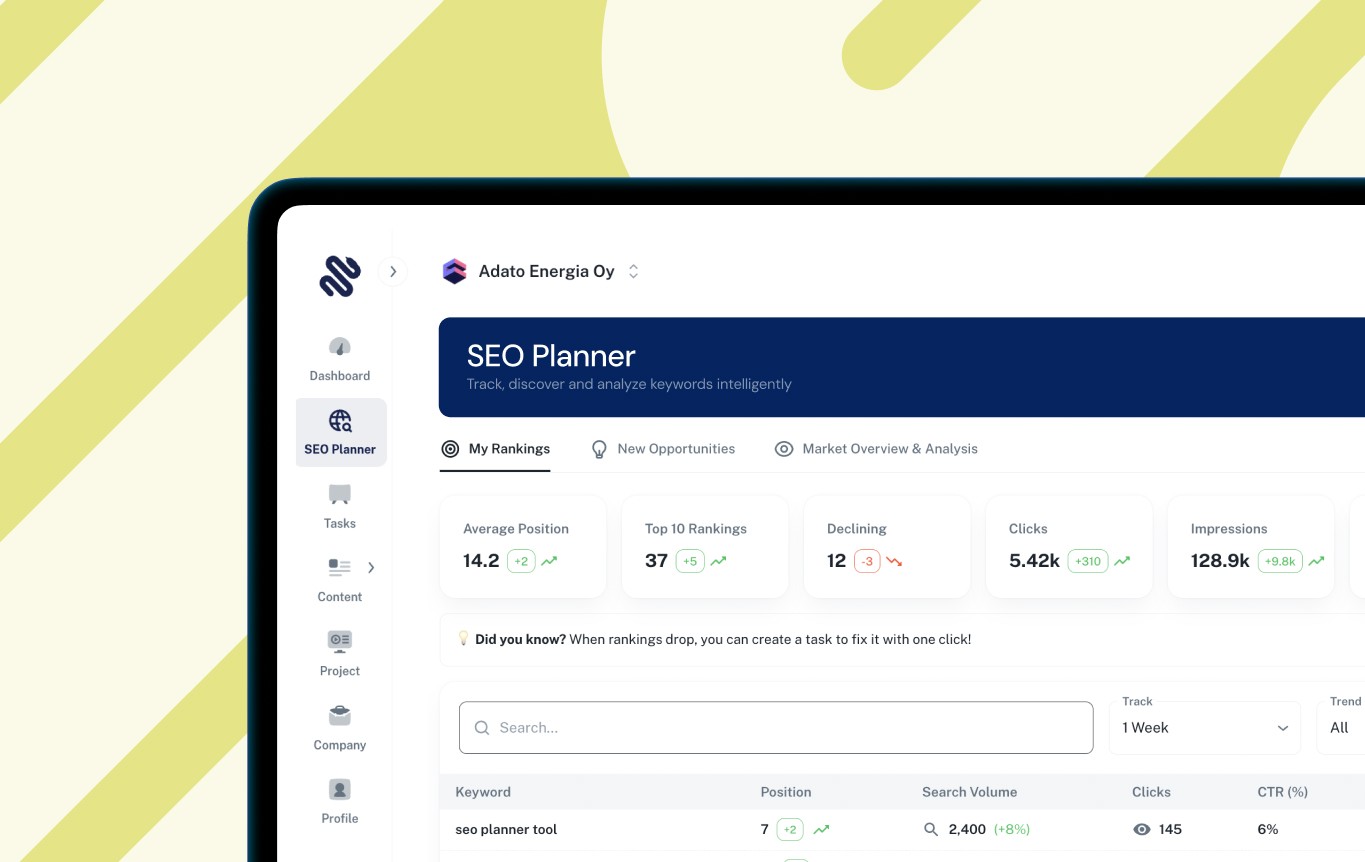
A real-time growth report shows current keyword positions, clicks and search volume in one live view. Instead of a figure that was true on the day a document was exported, you see where you stand now. That matters when a competitor moves or a page slips, because you spot it the same week rather than at the next monthly meeting.

One live keyword view
The dashboard puts positions, clicks and search volume together, so you read cause and effect in the same place.
When a term rises or a click rate shifts, you can act on it straight away instead of waiting for a static report to catch up.
The difference from a static monthly PDF is speed and honesty. A PDF freezes one moment and ages the instant it is sent. A live dashboard keeps pace with the results, so the conversation is always about where things stand today, not where they stood a fortnight ago.
Alongside the live view, a regular written summary keeps the story clear. We deliver one clear report every week covering what was published, what changed and what comes next. The dashboard answers what is happening; the weekly note explains why and what you should do about it.
The plan improves because the data feeds it. In a structured growth programme, the third month focuses on tracking rankings, refining strategy with real-time data and delivering growth reports. By that point there is enough history to see which topics earned their place, so effort shifts towards the terms and pages that are proving themselves.
SEO & GEO
Get found in Google and AI search. Dashboa builds a 12-month content plan and publishes 5 articles a month around the terms that convert best for you.
- 5 articles per month
- 12-month content plan
- Keyword and AI search (LLM) tracking
- Competitor tracking and monthly technical audit
299 €per month, excl. VAT
Learn moreThis is where a reporting system earns its keep. You can see how Dashboa automates growth tracking so the figures stay current without manual effort. The wider AI SEO platform capabilities tie the measuring, reporting and content planning into one loop, giving you a report you can act on every week.
How can I track my SEO performance?
Track keyword rankings, organic traffic, click-through rate and conversions using the same tools and time periods each round. Then follow those numbers forward to inquiries over several months, so you judge the work on customers rather than clicks. Automating the collection keeps the figures current and comparable from one report to the next.
Is SEO still relevant in 2026?
Yes. Search now spans both Google and AI assistants such as ChatGPT and Gemini, and buyers ask both for recommendations. Reporting shows whether they find and recommend you, so SEO stays relevant as long as people look for suppliers online.
How often should SEO reports be produced?
Report on a consistent schedule so you can compare like-for-like periods. A weekly report keeps changes visible and lets you catch drops early, which helps because search visibility builds over months, not days. Consistency matters more than any single frequency, so pick a cadence and keep to it.
Can ChatGPT do an SEO audit?
AI can help summarise data and draft explanations, but accurate reporting needs continuous tracking from connected tools. Rankings, traffic and AI mentions change constantly, so a one-off prompt cannot keep pace with them. Use AI to interpret figures, not to replace the measurement behind them.
What is the difference between an SEO report and an SEO audit?
A report tracks performance over time, showing how rankings, traffic and conversions move month to month. An audit is a point-in-time check of technical and content issues to fix. You use the report to steer the programme and the audit to find specific problems to repair.
See your SEO performance in one place
Get a weekly report that tracks rankings, traffic and AI mentions, and shows what to do next. Pick the plan that fits your market.
Choose your plan